

Safety culture is the way safety is perceived, valued, prioritized, and integrated into all activities in the workplace. Rather than referring to the company’s safety policy and program, it is a set of core values and behaviors that prioritize safety. Safety culture encapsulates the mindsets, attitudes, and behaviors of workers, supervisors, managers, and owners toward safety in the workplace.
Having a positive safety culture within an organization promotes more than safety. It is vital for a successful and effective health and safety program. According to OSHA, developing a strong safety culture has a significant impact on the accident reduction of any process.
Additionally, a positive safety culture helps strengthen worker confidence and retention, organizational behavior, and even productivity.
While qualities may differ from organization to organization, companies with a strong safety culture share several characteristics, including:
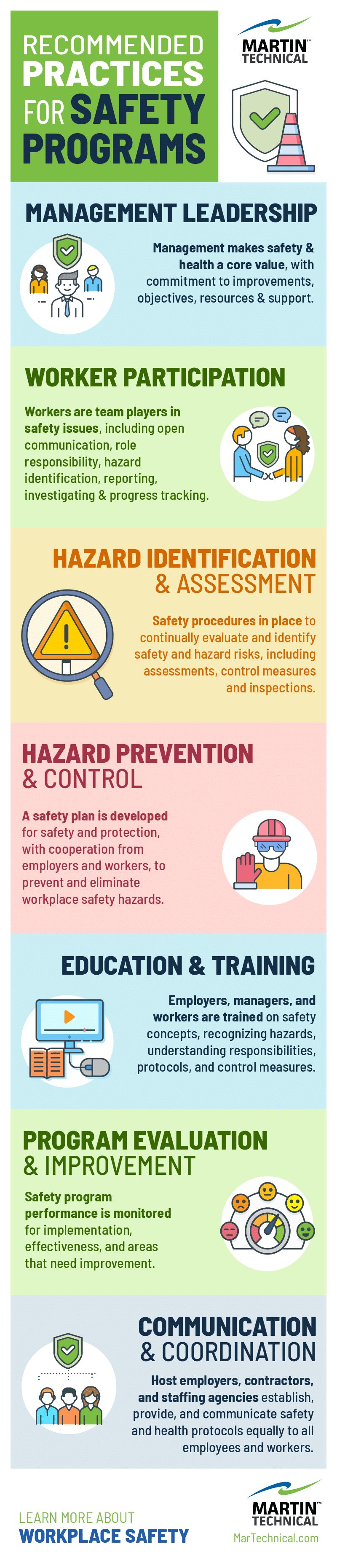 continuous safety and health improvement, communicate that commitment to workers, and set program expectations and responsibilities. Managers shall make safety and health a core organizational value, establish safety and health goals and objectives, provide adequate resources and support for the program, and set a good example. Often, a shift in safety culture is unsuccessful because there is without top-down support. The change is temporary and ends by slipping back into old patterns, or there is no change.
Consider developing training programs with the help of industry subject matter experts that offer blended and interactive training solutions. Ideally, a comprehensive training program should include a good mix of on-site training, hands-on validation, online learning, webinars, toolbox talks, and virtual reality courses in multiple languages for easy access.
Creating a positive workplace safety culture goes a long way towards changing the mindset, and the actions, of both workers and management. Often, organizations recognize the need to change the workplace safety culture in response to a culture that’s become complacent. The effects of complacency can be catastrophic in causing accidents, injuries, illnesses, costly fines, and even loss of life.
Continuous processes shall be established to monitor safety program performance, verify program implementation, and identify the shortcomings and opportunities for improvement.
A positive safety culture will be easier to build and maintain when employees feel comfortable reporting concerns and believe that the reporting process is positive. Keeping team members motivated and updated about the improvement is essential to maintaining a positive safety culture. Recognizing individuals and departments for improvements can effectively keep team members excited and invested in building a positive safety culture.
Benefits of Infrared Inspection: https://martechnical.com/electrical-infrared-inspection/
Occupational Safety and Health Administration’s (OSHA) Construction Safety & Injury Prevention Program Workbook
Infographic: Core Elements of the Safety and Health Program Recommended Practices
We are here to help you.